
Muscle matters after 40 because it supports your bones, your metabolism, and your ability to stay independent for decades to come. It does get harder to hold onto as the years go by, but you can still build it in your 40s, 50s, 60s, and beyond. The good news is that strength training works, and it's never too late to start.
Let's walk through what actually changes, why it's worth your effort, and how to keep getting stronger without turning your whole life into a workout.
What happens to muscle as we age?
Here's the honest version. Muscle mass and strength do tend to decline gradually with age, a process called sarcopenia, and it picks up speed after 60. Over time that loss is tied to less mobility and independence, which is exactly why it's worth paying attention to now.
But it isn't a cliff you fall off on your 40th birthday. Researchers describe it as a normal part of aging that strength training can slow down, and you can keep building muscle well past 40.
Hormones shift and recovery takes a little longer than it used to, so what worked at 25 may not fit your body today. That isn't a failure. It just means your training gets to grow up with you.
Why does muscle matter after 40?
Your bones. Muscle and bone are teammates. One 2022 review of studies found that progressive strength training improved leg strength and hip bone density in older adults, with the clearest results for strength.
Your metabolism. Losing muscle with age is linked to higher insulin resistance, so every bit of muscle you build or keep is working for your metabolic health.
Your independence. This is the big one. Strength is what lets you carry the groceries in one trip, get up off the floor without a second thought, climb stairs, and travel without worry. A systematic review found that resistance training improved walking speed and balance and lowered fall risk in older adults with reduced muscle function.
You can still build muscle in your 40s, 50s, 60s, and beyond
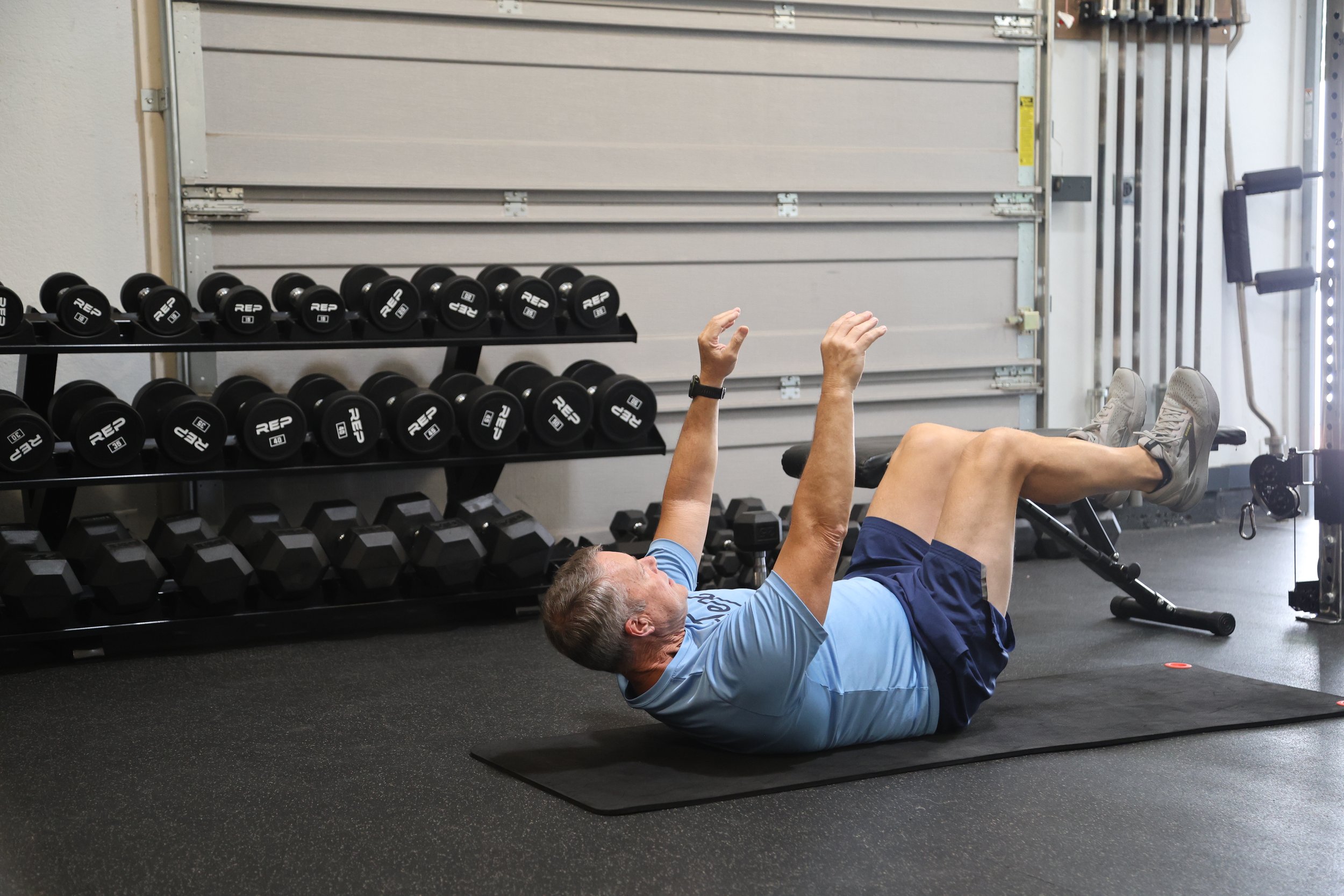
Here's the encouraging part. Muscle keeps responding to training as you get older. It may respond a little less dramatically than it did at 22, but training is beneficial at any age, and that includes you.
The goal is training that challenges you at the right level, supports your recovery, and fits your life. That works at 45, 55, and 65, and smart and consistent beats extreme and short lived every time.
What does it take to build and keep muscle?
The recipe is simpler than the fitness industry makes it sound. Four things do most of the work:
Consistent strength training. Showing up on a regular schedule adds up over time.
Progression. Gradually making things a little harder keeps your body adapting.
Enough food, including protein. Muscle needs fuel to repair and grow, so eating enough overall matters as much as the protein itself.
Sleep and recovery. Muscle builds in the time between sessions, not only during them.
Cardio is wonderful for your heart, and we love a good walk. But strength training is more effective for building strength and muscle, so it deserves its own spot in your week.
Common questions about strength training after 40
Here are a few things we hear a lot.
Do I have to lift heavy?
Heavy for you, and that changes as you get stronger. Loads increase gradually, and in the research on bone density, higher loads tended to work better than higher volume. A coach can help you find a starting point that feels challenging without feeling scary.
How often should I strength train?
Two to three times a week is a great target for most adults, according to the exercise guidelines. You don't have to do more than that to see progress.
Is your metabolism really slowing down after 40?
Less than you probably think. A large 2021 study of daily energy use across the human lifespan, published in the journal Science, found that, adjusted for body size, it stayed stable from age 20 to 60 and only began to decline after that. What does shift in midlife is body composition, activity, sleep, and hormones, which is exactly why keeping your muscle matters.
How does strength training support your bones?
Bones respond to load the same way muscles do. Strength training combined with weight bearing movement that has some impact, like jumping or hopping, is among the most effective ways to maintain or increase bone density. Walking and cycling are great for your heart, but the evidence for building bone with low impact exercise alone is minimal.
What if I have an injury or a health condition?
Check with your doctor first, especially if you have osteoporosis or low bone density. From there, a coach can adjust your exercises, loads, and pace to fit what your body can do today.
How does OPEX Round Rock approach strength after 40?
At OPEX Round Rock, every client works with a dedicated coach who builds a program around your goals, movement patterns, and lifestyle, then adjusts it every month as you progress. Strength training, nutrition coaching, and recovery live in the same plan, so everything that builds muscle works together.
You train in a small group, which means the energy of working out alongside others plus a coach on the gym floor making sure you move safely and well. It's a supportive space where your coach knows your name and your goals.
Ready to get stronger?
Mark, who has trained at OPEX Round Rock since 2023, describes it as a lifestyle change and a long term investment, so that "you can still go hiking in your 80s."
You have more strength in you than you think, and it's never too late to start building it.
Getting older is inevitable. Getting stronger is still an option.
Book a free consult today and we'll talk through where you're at and where you want to go.